Friday, 31 May 2013

Tawny Mining Bees

One of the things I like about the 'Meet Your Neighbours' style of images is the ease with which it is possible to make composite images. Last year I photographed an attractive female Tawny Mining Bee and was keen to show it in comparison to the less striking male. This year I photographed the male and so I am now able to put them together into a single image.

The smaller male is on the left, the female on the right.

PLEASE CLICK TO ENLARGE IMAGE


Monday, 20 May 2013

Emerging Damselflies

Most years I normally manage to find some emerging Large Red Damselflies in late April/early May at one of my local nature reserves. It started off being more luck than judgement but in the last 2-3 years I think I have developed a better understanding of exactly which part of the reserve they prefer to emerge in and when they are most likely to do it. Last week I spent a very enjoyable couple of hours trying to spot them shortly after they climb out of the water while trying to distinguish them from the exuvia (larval cases) of the damselflies that had already emerged. Once I had 'got my eye in' I did manage to find 2 or 3 of the still wet nymphs as they sat on a reed prior to their emergence as adult damselflies.

Here are a couple of images for starters, no doubt more will follow and also some video.


PLEASE CLICK TO ENLARGE IMAGES


In case anyone reading this is not familiar with Large Red Damselflies, here is an adult once its wings have hardened and its colours have developed (photographed in a previous year).


Sunday, 5 May 2013

Double Page Spread in BBC Wildlife Magazine

I'm always very pleased to have my images published in BBC Wildlife magazine as it's a magazine I've read on a regular basis since my teens. Back then I remember looking at the photography in the magazine with a mixture of awe and admiration, never did I imagine that one day I would see my own images published in the magazine.

Anyway, I'm particularly pleased to have achieved my first double page spread in BBC Wildlife magazine. It's an image I took last year of a newly emerged Four-Spotted Chaser dragonfly. I took it with my 35mm macro lens which is what gives the image the unusual combination of close-focus and (relatively) wide angle background. It's one of my favourite images and so I'm particularly pleased that they chose this one. They've cropped the image slightly and flipped it horizontally but it still looks very nice in my humble opinion (although the image below is just a quick snap of the magazine so doesn't look great).


PLEASE CLICK TO ENLARGE IMAGES


They also published my image of a mating pair of Common Frogs in the Q&A section. I did well this month!


Tuesday, 30 April 2013

Bumble Bees

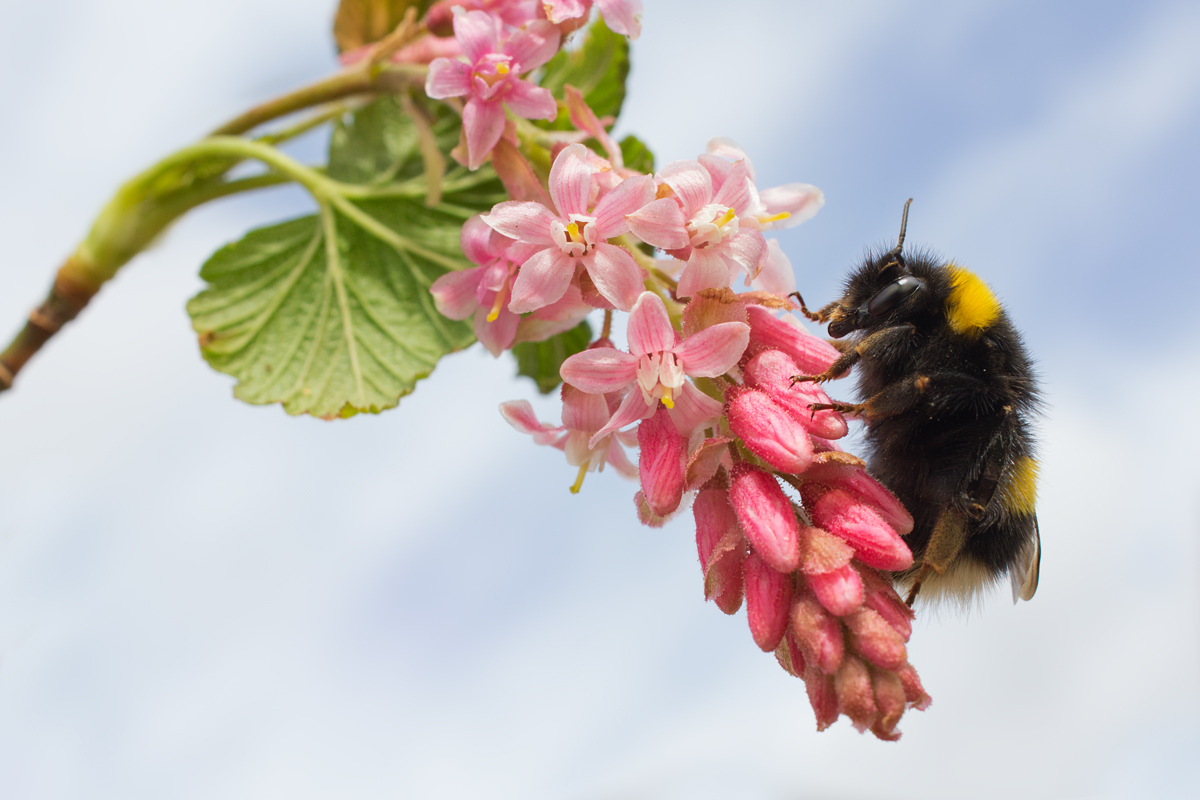
After this year's prolonged winter it's interesting to see the insects start to emerge and to assess how they have fared over those cold months. One casualty appears to be the Seven Spot Ladybird, I've only found one or two in my garden over the last few weeks compared to literally dozens in recent years. Thankfully bee numbers appear to be healthy, the flowering currant bush in my garden is being visited by lots of bumble bees and I'm now seeing quite a few different miner bees as well.

Here are a couple of springtime images of a White-Tailed Bumble Bee (Bombus lucorum) feeding on the flowering currant.

PLEASE CLICK TO ENLARGE IMAGES


Monday, 22 April 2013

Zebra Spider

Now that spring has finally arrived a growing number of invertebrates are starting to appear in my garden. One of the first was the Zebra Spider (Salticus scenicus), a tiny jumping spider that can often be found on rocks and walls warming itself in the sun. On one particular day a couple of weeks ago I found 3 different individuals, including this one who was exploring some moss on top of a rock.


PLEASE CLICK TO ENLARGE IMAGES


Zebra Spiders' eyes make them very photogenic, dare I say it almost cute? :)


Saturday, 13 April 2013

Macro Article in Digital SLR magazine

I'm very pleased to have an 8 page macro photography guide in the new issue of Digital SLR magazine. The article provides the 9 'rules' of macro photography and is aimed at beginner photographers who are the target audience of the magazine. The article also features a nice selection of my images and I have to say that I'm very pleased with the print quality of the magazine. In the past I have sometimes been disappointed with the print quality of some magazines and have felt my images didn't look as good as they should. Not so on this occasion I'm pleased to say.

I should also mention that while my mugshot is provided in the top right hand corner of the opening double page spread, the chap in the blue jacket is not me. I have very few images of me 'on location' and so the magazine provided their own using one of their team. I quite like the idea of having my own stunt double.

Below are 6 of the 8 pages from the article, reproduced at such a size as to make it very difficult to read the text! I'm afraid you will have to buy a copy of the magazine if you want to read the full article.

PLEASE CLICK TO ENLARGE IMAGES


Wednesday, 3 April 2013

Nikon: A Friend of Wildlife?

For many years Nikon equipment has been widely used by wildlife photographers and the company has been very keen to publicise this association and to portray itself as being 'at the heart of nature' (to use their own phrase).


Not surprisingly, some have therefore been surprised to discover that Nikon also produces a wide range of rifle sights including one, entitled 'the Monarch African', designed specifically for killing large game. To borrow from the Nikon marketing literature, this rifle sight is 'engineered for safari' and aimed at 'those seeking their dangerous game adventure on the dark continent' and 'is the proven choice for dangerous big game hunting'. They also claim that 'Africa has long been a continent of dreams for hunters around the world'. In other words this sight is specifically for trophy hunting - that despicable pursuit whereby rich hunters, typically from the US or Europe, 'bravely' kill lions and other large African species from several hundred yards away using a high powered rifle. We've no doubt all seen the sickening photographs of the hunter standing next to their victim while grinning and looking proud of their achievement.

While large multinationals such as Nikon inevitably prioritise global market share and profitability ahead of ethical considerations, I am still a little surprised that a company so synonymous with capturing the beauty of wildlife is also happy to be associated with those that seek to destroy it for pleasure. I also wonder how many highly principled wildlife photographers (and there are a few) were aware of this darker side of Nikon's product line. Stefano Unterthiner has publicly criticised Nikon and urged them to end their support of trophy hunting. I hope others are prepared to do likewise.